
We are in the middle of a serious heat wave. The test trailer is parked outside, closed up, sitting in the sun. For several days in a row the cabin has broken 100°F. Headwaters has stayed online the whole time, the fan has stepped up as the temperature climbed, and the system has not gone dark once.
What the phone is showing us
We watch the whole thing from Farwatch, because at 103°F you are not opening the trailer to check on anything. You look at the app.
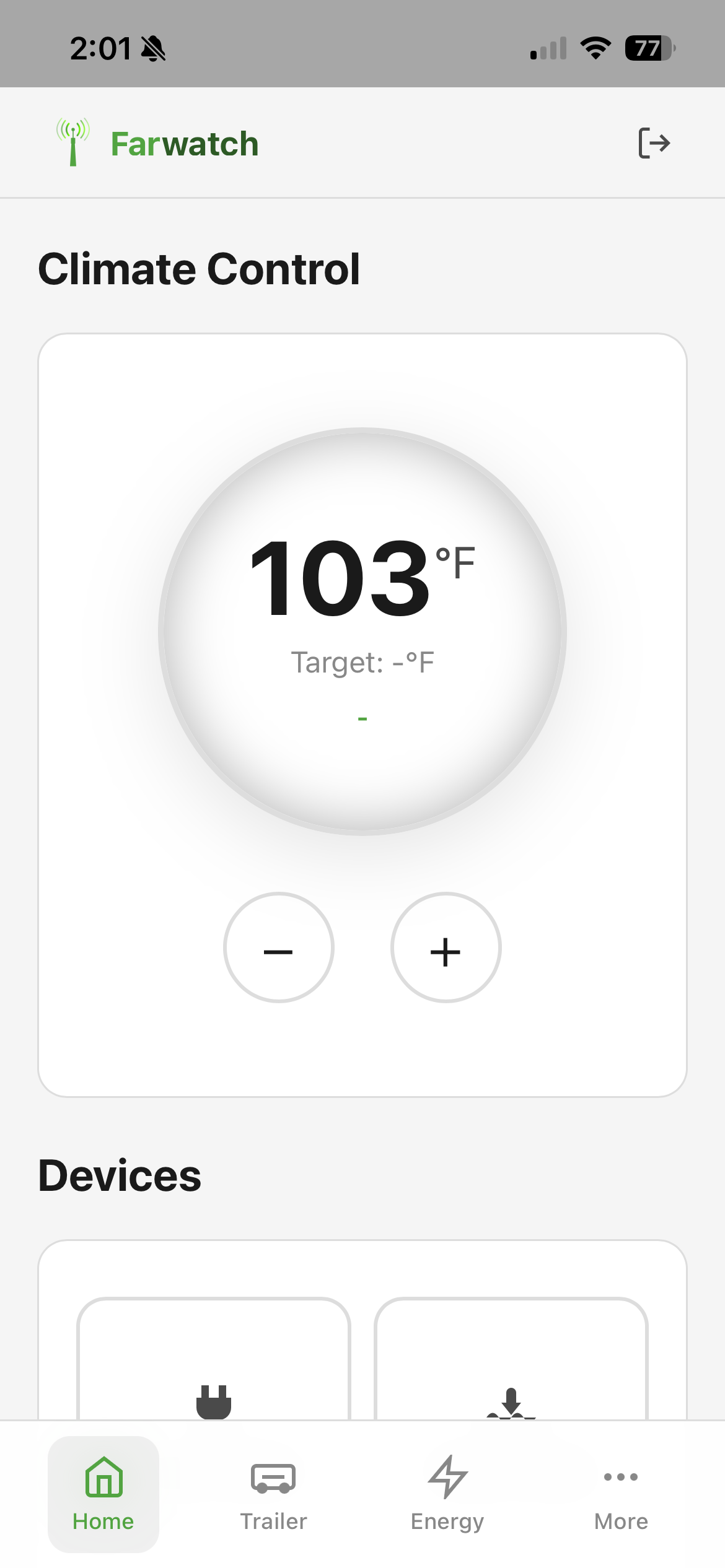
That is the environment Headwaters is living in. Not a workbench, not an air-conditioned office. A closed vehicle in full sun, cooking. This is the condition that matters. If the system cannot hold up here, none of the rest of the story means anything.
How the hardware is doing
Farwatch also reports back what Headwaters is feeling on the inside. On the hottest afternoons we have seen, the numbers look like this.
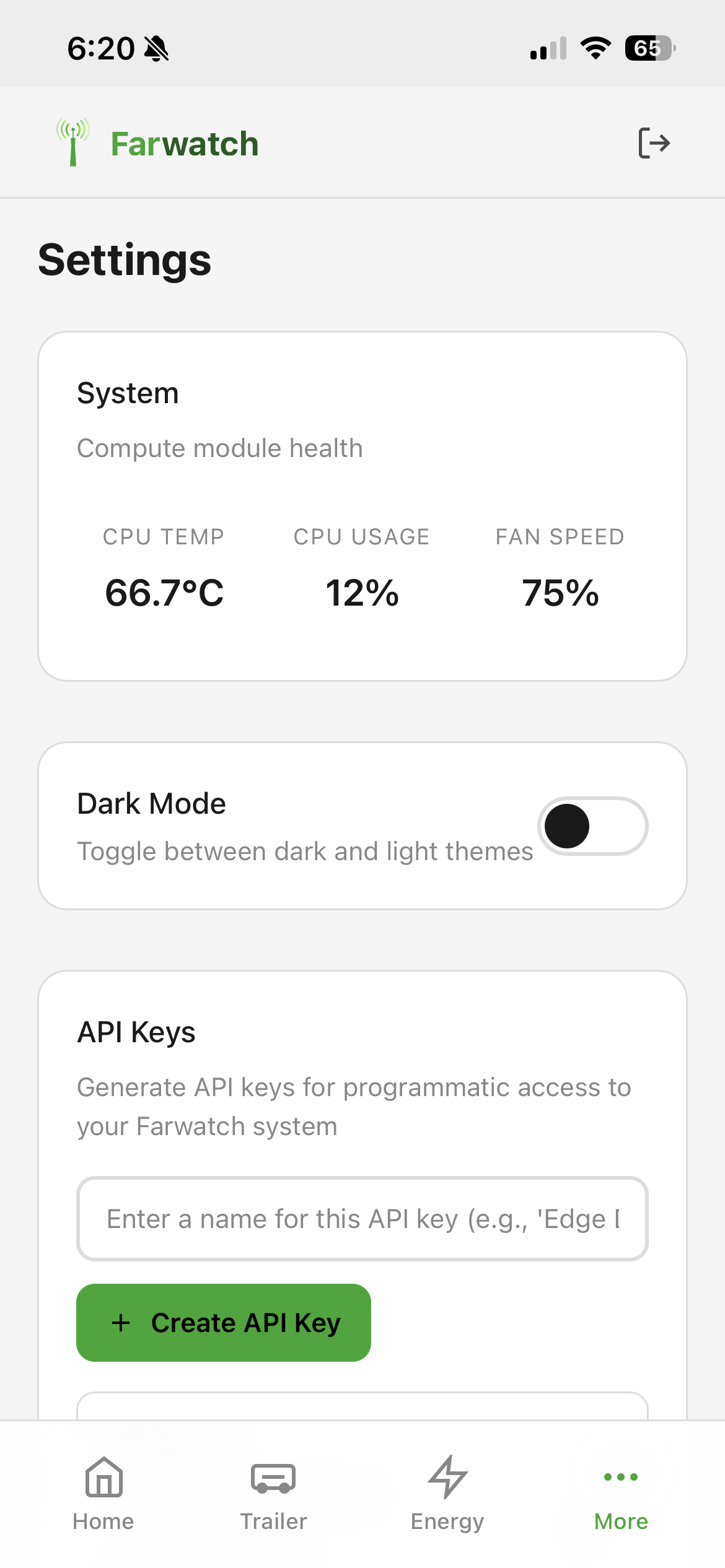
A few things worth pointing at.
- CPU temperature is under 70°C. That is well inside the safe operating range for the compute module. The chip itself is rated much higher than that. What we care about is that the fan curve is holding the line as the outside gets hotter.
- The fan is at 75%. That means the cooling loop still has a quarter of its capacity in reserve. It has room to work harder if the day gets worse.
- The system is idle-ish. CPU usage is low. The heat we are fighting is coming from the environment, not from the computer working too hard. The fan is doing its job for reasons that have nothing to do with the workload.
Running on the sun the whole time
The rig this is happening in is the same one we installed a few months back. 200W of solar on the roof, a 100Ah battery underneath, no shore power connected. The heat wave is not just a test for Headwaters. It is a test for the whole power side of the system too.
Hot days are actually kind to solar in one specific way: the sun is up early and stays up late. As long as the panel is not baking so hot that its own output drops, you have more hours of light to work with. The battery has not gotten anywhere near stressed on the discharge side. Headwaters draws its steady 15W, the sun tops the bank back up every day, and the whole thing keeps running.
There is another piece of this we have to respect, though. The battery management system inside the pack has its own opinion about temperature. If the cells themselves get too hot, the BMS will refuse to accept a charge. That is a safety feature, not a bug. You do not want to force current into a lithium cell that is already cooking. But it means the hottest day is also the day your charger is most likely to be told no. On a rig sitting closed up in full sun, that limit is closer than it is any other time of year. So far the pack has stayed cool enough to keep taking a charge. If we ever hit the day where the sun is high, the panels are pouring watts, and the BMS says no more, we will see it in Farwatch first, and we will have a real number to design around.
What we still want to see
We are not calling this solved. What we want next is the cabinet reading. When the sun swings low and the cabin drops back down toward the outside temperature, does Headwaters keep the fan spinning long enough to shed the heat it took on, or does it back off too early? We want to watch a few full day-night cycles at these temperatures to answer that.
We also want to see the same numbers on the days that come after. Silicon does not fail on the first hot afternoon. It fails on the fiftieth. So this post is a checkpoint, not a finish line. The system is doing what it was designed to do under conditions we have not been able to run in until now. That is worth marking down.
If you want to follow along, Farwatch is live, and the code that gathers these numbers is on GitHub like everything else we build.